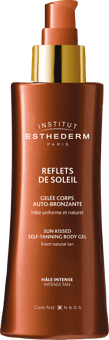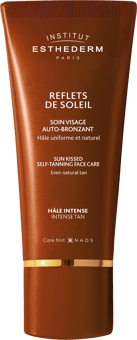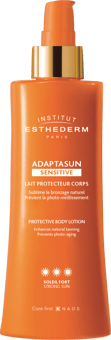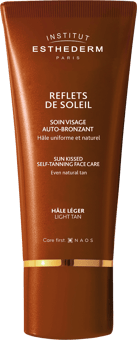
The formula at a glance

Each of our ingredients have been selected for their effectiveness. Find all the ingredients of your product grouped into families according to their role.

Ingredients under the magnifying glass

The ingredients of our formulas have been selected according to very strict dermatological criteria and recommended by independent toxicological experts. Classified in three main categories of active ingredients, you will discover the nature, role and origin of each by clicking on their name.

Here are grouped the ingredients that contribute to the expected effectiveness of the product: those that optimize or preserve the biological skin's mechanisms (such as hydration, regeneration, lipid-replenishing action), and those that have a very specific physico-chemical action (exfoliating, matifying, sun filters ...).

L’Eau Cellulaire contient / Cellular Water contains: AQUA/WATER/EAU, DISODIUM ADENOSINE TRIPHOSPHATE, CARNOSINE, MINERAL SALTS/SELS MINÉRAUX

The ingredients listed here are those contained in the latest formula for this product. As there may be a time lag between its production and its distribution on the market, we invite you to consult the list of ingredients on the packaging.

Aqua/water/eau

What is it?

Water contained in Cellular Water.

What’s the point?

Part of Cellular Water Technology.
Naos has designed a perfectly defined water that respects the 3 fundamental criteria of physiological fluids: pH, resistance to oxidation and concentration of mineral salts.
It optimises cellular function and preserves the balance of healthy skin.

How do you get it?

Mineral origin.

Dicaprylyl carbonate

What is it?

Fatty alcohol derivative.

What’s the point?

Emollient: soothes and softens the skin.

How do you get it?

Combination of fatty alcohol of plant origin, and a synthesised carbonate derivative.

Dipropylene glycol

What is it?

Polyol.

What’s the point?

Humectant: maintains the skin’s moisture level.

How do you get it?

Synthesis

To select an ingredient, NAOS can call on synthesis in order to:
- reconstitute a natural molecule without having to extract it from a plant and thus better respect biodiversity,
- obtain a pure, perfectly defined ingredient.

Ethylhexyl methoxycrylene

What is it?

Aromatic derivative.

What’s the point?

Stabilising: protects the formula from light.

How do you get it?

Synthesis

To select an ingredient, NAOS can call on synthesis in order to:
- reconstitute a natural molecule without having to extract it from a plant and thus better respect biodiversity,
- obtain a pure, perfectly defined ingredient.

Homosalate

What is it?

Aromatic derivative.

What’s the point?

Solar protection: organic filter, absorbs UV radiation.

How do you get it?

Synthesis

To select an ingredient, NAOS can call on synthesis in order to:
- reconstitute a natural molecule without having to extract it from a plant and thus better respect biodiversity,
- obtain a pure, perfectly defined ingredient.

Polyglyceryl-10 isostearate

What is it?

Glycerin and fatty acid derivative.

What’s the point?

Emulsifying: enables the formation and stabilisation of an emulsion.

How do you get it?

Obtained by synthesis from glycerins and fatty acid of plant origin.

Ethylhexyl salicylate

What is it?

Octisalate: salicylic acid derivative.

What’s the point?

Solar protection: organic filter, absorbs UV radiation.

How do you get it?

Synthesis

To select an ingredient, NAOS can call on synthesis in order to:
- reconstitute a natural molecule without having to extract it from a plant and thus better respect biodiversity,
- obtain a pure, perfectly defined ingredient.

Polyester-7

What is it?

Polymer.

What’s the point?

Water-resistance agent: optimises the product’s water resistance.

How do you get it?

Synthesis

To select an ingredient, NAOS can call on synthesis in order to:
- reconstitute a natural molecule without having to extract it from a plant and thus better respect biodiversity,
- obtain a pure, perfectly defined ingredient.

Propanediol

What is it?

Polyol.

What’s the point?

Humectant: maintains the skin’s moisture level.

How do you get it?

Biotechnology.
Biotechnology uses biological processes, including natural fermentation, to obtain ingredients.

Butyl methoxydibenzoylmethane

What is it?

Avobenzone (or BMDBM): aromatic derivative.

What’s the point?

Solar protection: organic filter, absorbs UV radiation.

How do you get it?

Synthesis

To select an ingredient, NAOS can call on synthesis in order to:
- reconstitute a natural molecule without having to extract it from a plant and thus better respect biodiversity,
- obtain a pure, perfectly defined ingredient.

Butylene glycol

What is it?

Polyol.

What’s the point?

Humectant: maintains the skin’s moisture level.

How do you get it?

Synthesis

To select an ingredient, NAOS can call on synthesis in order to:
- reconstitute a natural molecule without having to extract it from a plant and thus better respect biodiversity,
- obtain a pure, perfectly defined ingredient.

Dimethicone

What is it?

Silicone.

What’s the point?

Sensory agent: optimises sensory appeal to ensure pleasure of use and a soft feel.

How do you get it?

Synthesis

To select an ingredient, NAOS can call on synthesis in order to:
- reconstitute a natural molecule without having to extract it from a plant and thus better respect biodiversity,
- obtain a pure, perfectly defined ingredient.

Neopentyl glycol diheptanoate

What is it?

Fatty acid derivative.

What’s the point?

Emollient: soothes and softens the skin.

How do you get it?

Obtained by synthesis, or combination of fatty acids extracted from vegetable oil, and a synthesised glycol.

Tocopheryl acetate

What is it?

Vitamin E derivative.

What’s the point?

Antioxidant: neutralises free radicals and their harmful effects on the skin.

How do you get it?

Synthesis

To select an ingredient, NAOS can call on synthesis in order to:
- reconstitute a natural molecule without having to extract it from a plant and thus better respect biodiversity,
- obtain a pure, perfectly defined ingredient.

Fragrance (parfum)

What is it?

Fragrance composition.

What’s the point?

Scent & Fragrance: provides the product with olfactory sensory appeal.

How do you get it?

Combination of synthesised and plant-based odour molecules.

Creatine

What is it?

Peptide.

What’s the point?

Contributes to the Global Cellular Protection patent.
This patented complex optimises the skin’s biological protection mechanisms, in particular its antioxidant properties and ability to protect cellular DNA.

How do you get it?

Component naturally found in the skin, obtained by synthesis.

To select an ingredient, NAOS can call on synthesis in order to:
- reconstitute a natural molecule without having to extract it from a plant and thus better respect biodiversity,
- obtain a pure, perfectly defined ingredient.

Glycyrrhetinic acid

What is it?

Enoxolone or 18-beta-glycyrrhetinic acid.

What’s the point?

Soothing: reduces sensations of skin discomfort.

How do you get it?

Liquorice extraction.

Mannitol

What is it?

Sugar derivative.

What’s the point?

Antioxidant: neutralises free radicals and their harmful effects on the skin.

How do you get it?

Obtained from sugar of plant origin.

Methylpropanediol

What is it?

Polyol.

What’s the point?

Contributes to Adaptasun technology.
This technology optimises the skin’s adaptation mechanisms in the sun and facilitates natural tanning.

How do you get it?

Synthesis

To select an ingredient, NAOS can call on synthesis in order to:
- reconstitute a natural molecule without having to extract it from a plant and thus better respect biodiversity,
- obtain a pure, perfectly defined ingredient.

Pentylene glycol

What is it?

Polyol.

What’s the point?

Stabilising: contributes to the product’s homogeneity or stability.

How do you get it?

Synthesis

To select an ingredient, NAOS can call on synthesis in order to:
- reconstitute a natural molecule without having to extract it from a plant and thus better respect biodiversity,
- obtain a pure, perfectly defined ingredient.

Soybean glycerides

What is it?

Soybean glycerides.

What’s the point?

Contributes to Adaptasun technology.
This technology optimises the skin’s adaptation mechanisms in the sun and facilitates natural tanning.

How do you get it?

Soybean extraction.

Hydroxyethyl acrylate/sodium acryloyldimethyl taurate copolymer

What is it?

Acrylic polymer.

What’s the point?

Gelling: provides the texture with consistency.

How do you get it?

Synthesis

To select an ingredient, NAOS can call on synthesis in order to:
- reconstitute a natural molecule without having to extract it from a plant and thus better respect biodiversity,
- obtain a pure, perfectly defined ingredient.

Squalane

What is it?

Squalane.

What’s the point?

Stabilising: contributes to the product’s homogeneity or stability.

How do you get it?

Obtained by synthesis from squalene extracted from olive oil.
Can also be obtained by synthesis and biotechnology from plant sugar.

Acetyl tyrosine

What is it?

Amino acid derivative.

What’s the point?

Contributes to Adaptasun technology.
This technology optimises the skin’s adaptation mechanisms in the sun and facilitates natural tanning.

How do you get it?

Obtained by synthesis from tyrosine of plant origin.

INSTITUT ESTHEDERM
Discover our unique scientific approach, ecobiology.

Our transparency approach

Welcome to our Laboratories in Aix-en-Provence.
Discover our unique scientific approach, ecobiology.

Other formulas INSTITUT ESTHEDERM

Un soin en été Eau de parfum

INSTITUT ESTHEDERM

Discover it composition

Adaptasun Huile solaire hydra-protectrice Corps et Cheveux - Soleil modéré

INSTITUT ESTHEDERM

Discover it composition